

Lameness: when to investigate
You know your horse’s normal better than anyone, which is why small changes in the way they go are often first noticed under saddle. Sometimes it is not obvious lameness, but simply a feeling that something is not quite right.
Subtle lameness can show up as unevenness through turns, resistance in one direction, difficulty stepping under, or inconsistency in the canter. A horse may still appear sound in hand, particularly if they are fit, willing and compensating well.
That is why early investigation can be so valuable. Assessing the issue before it becomes more established can lead to clearer answers, a more targeted plan and better support for your horse’s long term soundness.
At Willinga Park Vet Hospital, every lameness investigation begins with a full assessment. If the issue is not clearly visible on the ground, we may ask you to bring your usual tack and ride your horse in our arenas so we can observe what you are feeling under saddle and identify the most appropriate next steps.
Early signs often present as changes in performance rather than an obvious limp. You might notice:
Behaviour can also be an important signal of discomfort. The Ridden Horse Pain Ethogram, or RHpE, identifies 24 behavioural changes, including tail swishing, rearing, bucking, pinned ears and specific facial expressions, that can be associated with musculoskeletal pain. We use these indicators to help assess both the presence and severity of pain in the horse.
If your horse feels different, it is worth paying attention.
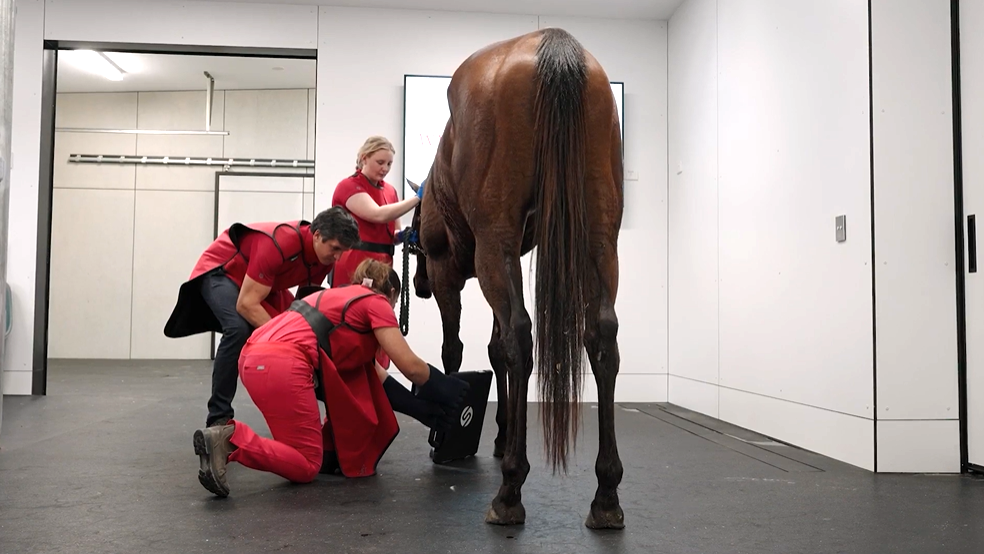
What a lameness assessment involves
We assess lameness using a thorough and comprehensive approach, working closely with owners every step of the way. The first step of a lameness examination is identifying the source of the lameness.
Assessments include different gait analysis across different surfaces, including rubber, asphalt, and arena footing to highlight pain in different tissue types. Flexion tests are used to show the full degree of lameness. , Some lamenesses may only be evident under saddle. For these cases, we encourage clients to bring their tack so we can assess the horse in the conditions where the lameness appears during performance. Diagnostic anaesthesia including nerve and joint blocks, before diagnostic imaging such as radiographs, ultrasound or mri is performed.
What you can do before your appointment
You do not need to have all the answers before you book in. That is what the assessment is for. But a few details can help your vet build a clearer picture quickly.
The takeaway
If you are thinking, I can feel it but I cannot see it, you are not alone. Subtle lameness is common, especially in performance horses, and it is exactly where a structured assessment can make the biggest difference.
If something feels off, do not ignore it. If you are concerned, contact our team on (02) 4405 5660, email vethospital@willinga.com.au or visit https://willingapark.com.au/vet-hospital