

Summer, heat load and gut risk in horses
Each summer, we see an increase in horses affected by a familiar combination of heat, humidity, travel and subtle changes in hydration. For some horses it shows up as slow recovery and reduced appetite. For others, the first clear sign is gut related. Less manure, firmer manure with mucus, mild discomfort, then colic.
What makes this seasonal pattern tricky is that the early stage rarely looks dramatic. Horses can still be bright at times, still pick at feed, still drink a little and it is easy to assume it will settle overnight. Often, it is only when the horse is clearly uncomfortable that owners realise something has been building.
Dr Stephanie Givan, Equine Internal Medicine Specialist at Willinga Park Equine Vet Hospital, describes the common start point like this. “In summer we often see horses that have not been quite right for a few days. They might just be quieter, not finishing their feed, or not drinking as well after travel or work. Those small changes can be the first sign that the GI tract is affected. Early assessment lets us step in before the case becomes more concerning.”
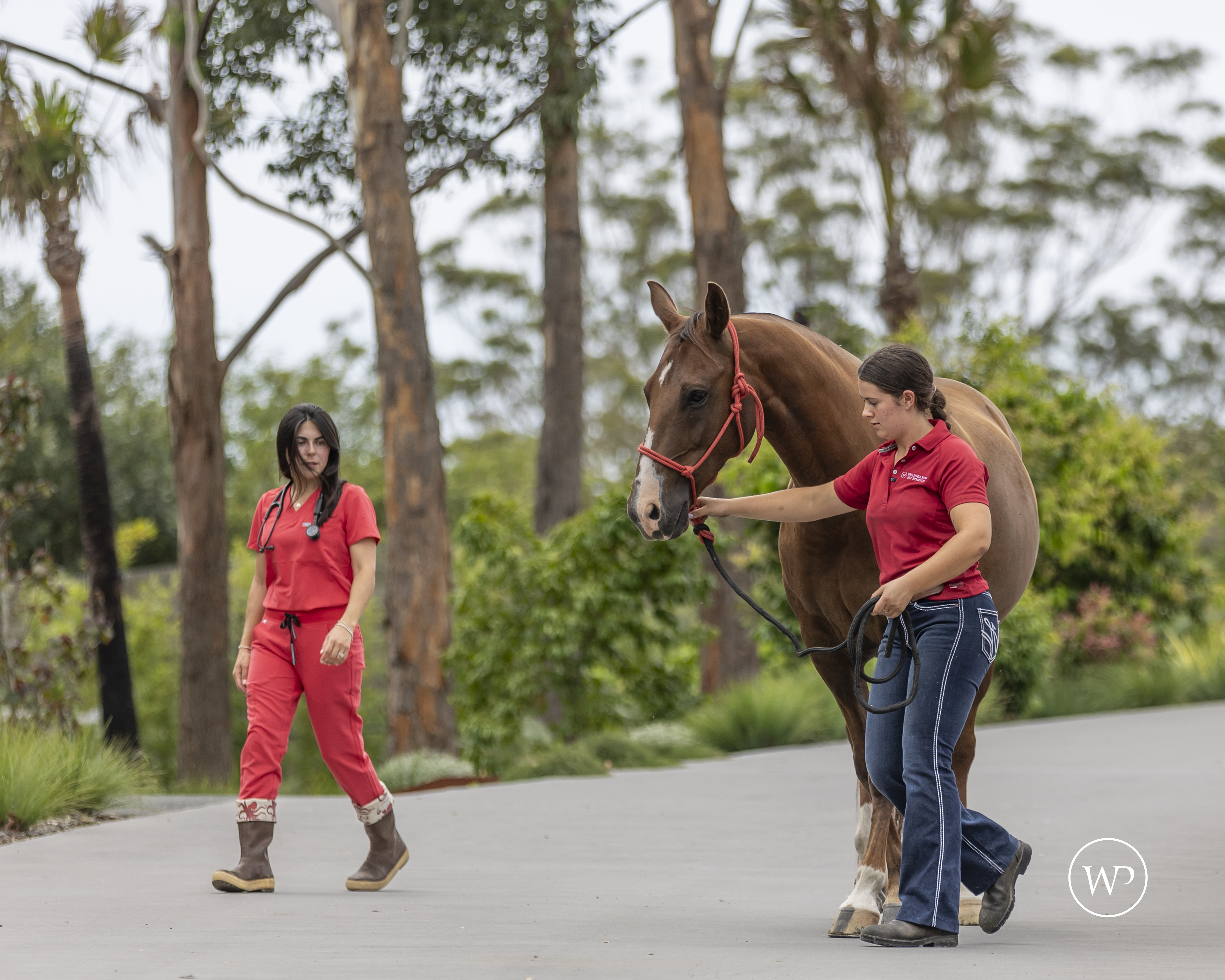
On the coast, humidity is often the difference between a horse that copes and a horse that struggles. Sweat only helps if it can evaporate. When the air is heavy, horses may keep sweating but still fail to cool efficiently. Warm nights can also reduce recovery, particularly for horses kept in sheltered areas with limited airflow. Add common summer disruptors such as float travel, changes in water, a busy event day, or time standing in the sun and it becomes easy for a horse to drift into a fluid and electrolyte deficit without anyone noticing straight away.
That fluid deficit matters because it does not stay isolated to performance. Dehydration can affect gut motility and contribute to impaction type colic. A horse does not need to be in hard work to be at risk. Horses at pasture can drink less than expected if trough water is warm, troughs are dirty, there is competition at water points, or the horse is unsettled by routine changes. In many cases, the first sign owners notice is not “heat stress” at all. It is a horse that is off feed, producing less manure, or looking mildly uncomfortable.
The most useful mindset in summer is to treat “not normal” as meaningful.
Signs that should prompt you to pay attention and act early
If you notice one sign, monitor closely. If you notice several together, call your vet.
- Your horse is quieter than usual, dull, or not themselves
- They are not finishing feed, or appetite has dropped
- Water intake seems reduced, especially after travel or an event day
- Breathing stays elevated longer than expected at rest or after light work
- They take much longer than usual to cool down
- Manure volume drops, manure becomes firmer or drier, or there are fewer piles than normal
- Mild colic behaviours that come and go, pawing, flank watching, stretching, repeated lying down, restlessness
Signs that should be treated as urgent
If these are present, do not wait to see if it improves.
- Ongoing or worsening pain
- Repeated attempts to lie down or roll, or the horse cannot settle
- No manure passing, or a marked drop over 12-24 hours
- Very high breathing effort, marked distress, or a horse that looks flat and unwell
- A horse that seems worse despite rest, shade, and cooling
Dr Lucas Nolazco, Specialist Equine Surgeon at Willinga Park Equine Vet Hospital, puts it simply: “With colic in hot weather, time is of the essence. Early examination helps us decide what support is needed and whether the horse needs closer monitoring. The earlier we understand what is happening, the more treatment options we usually have to offer owners.”
The simple prevention basics that make the biggest difference
- Ensure water is clean, fresh, and cool where possible, with easy access at all times. In group settings, providing more than one trough can reduce competition and encourage intake.
- Provide free-choice access to salt, and have electrolyte supplementation available when horses are sweating, travelling, or working in hot conditions.
- Encourage water intake by offering additional buckets with lightly flavoured water (such as a small amount of electrolyte or apple flavouring) alongside a plain water option.
- Support hydration through feed by soaking hay and offering wet feeds or mashes, particularly for horses that are less inclined to drink in the heat.
- Schedule exercise during the cooler parts of the day whenever possible.
- Monitor manure output as closely as appetite, as changes in quantity or consistency are often an early indicator of gastrointestinal compromise.
- For horses living on dry lots, feed off the ground where possible and discuss an individualised management plan with your veterinarian.
If you have a horse that is not bouncing back as expected in this weather, or you are worried a mild issue is turning into something more, an early conversation can make a big difference. Often, the goal is simply to step in before dehydration and gut slowdown become harder to shift.
Willinga Park Equine Vet Hospital provides emergency and referral care year round, including supportive care and close monitoring when a case needs more than can be managed safely at home.
Willinga Park Equine Vet Hospital
+61 2 4405 5658
vethospital@willinga.com.au
134 Forster Drive, Bawley Point NSW 2539